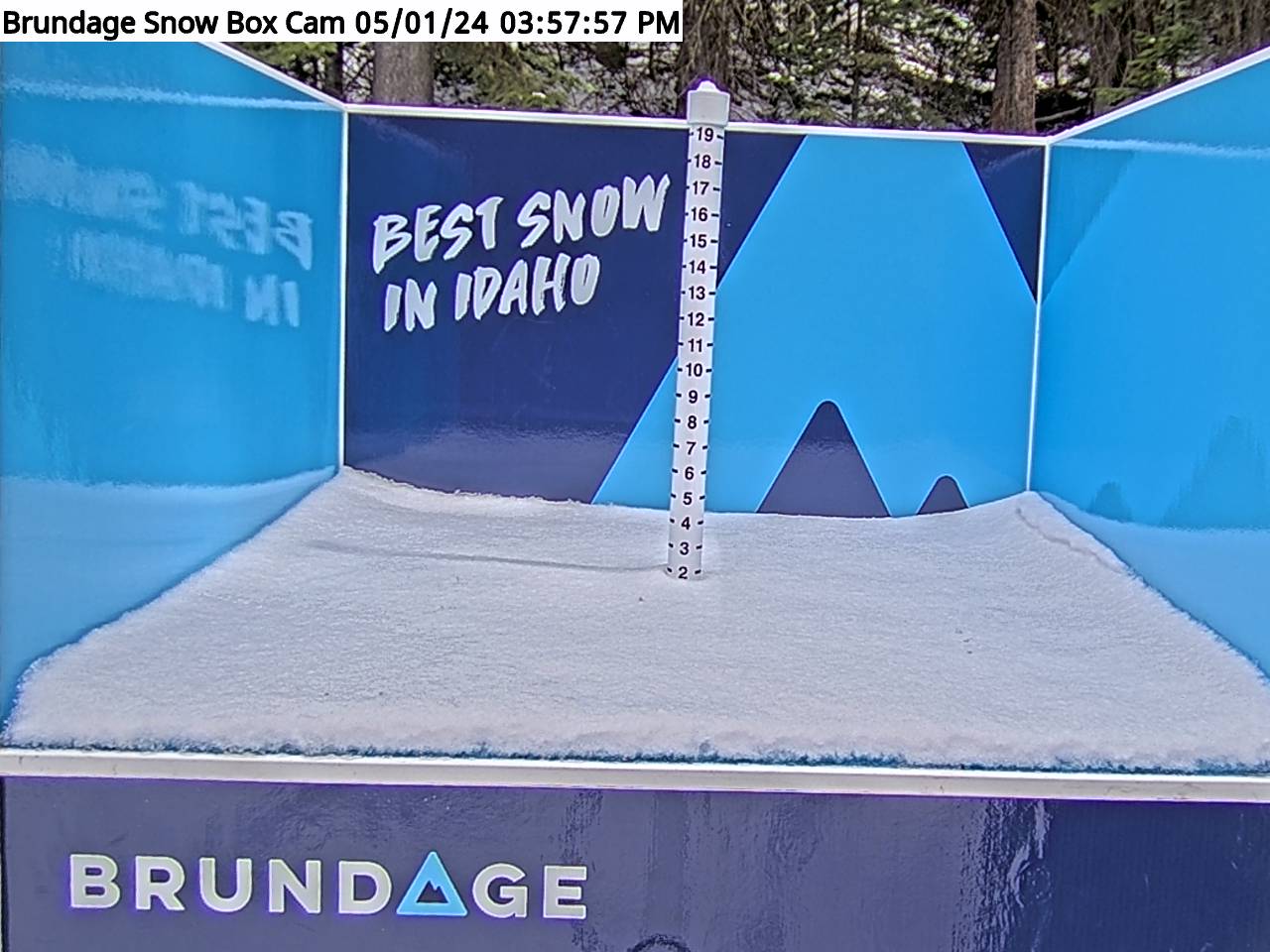
Base Area Snow Cam
Elevation: 6050’ - Brundage Base Area. This box will be cleared daily at 4:00 pm. Click image for larger view.
 Menu Toggle
 Open
Open
Open
Open


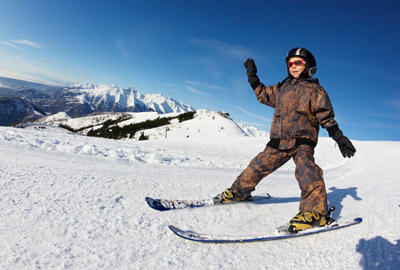 Brundage Mountain’s 320+ inch average annual snowfall outperforms most Idaho ski destinations through superior geographic positioning. February delivers peak conditions with 100+ inch monthly totals creating optimal powder skiing and riding opportunities. The combination of consistent best snow, minimal crowds, and 1,920 acres of terrain makes Brundage the strategic choice for serious skiers. Winter operations from November through April provide five months of reliable conditions across varied terrain from groomed runs to backcountry glades. Brundage Mountain consistently receives Idaho’s best snow and how its unique geography creates superior powder conditions
Let’s be very clear: not all Idaho snow is created equal. While Sun Valley attracts celebrities and Schweitzer Mountain Resort boasts massive acreage, Brundage operates on different physics entirely. The resort sits in a geographic sweet spot where Pacific storms collide with Central Idaho’s unique topography, creating what meteorologists call an orographic lift effect. This produces consistent, dry powder that falls more frequently and accumulates deeper than at competing destinations.
The numbers reveal the truth. Brundage Mountain averages more than 320 inches of natural snowfall each season at its base area. Compare this to Bogus Basin near Boise, which manages roughly 250 inches, or even the celebrated Sun Valley at Bald Mountain, which typically sees similar totals. But here’s the critical distinction: Brundage’s snow falls on steep terrain with northern exposures that preserve quality longer. Peak season depths commonly reach 90 to 96 inches at the summit, delivering the kind of coverage that turns good skiers into artists.
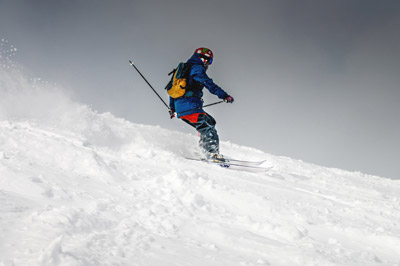 The quiet superiority of Idaho skiing stems from atmospheric moisture patterns that most recreational skiers never consider. Unlike Colorado’s continental snowpack or Montana’s variable conditions, Idaho occupies a Goldilocks zone. Not too maritime like the Cascades. Not too continental like the Rockies. The result? Snow with approximately 7% water content that strikes the perfect balance between flotation and stability.
This reveals why experienced backcountry enthusiasts increasingly migrate to places like Brundage, Tamarack Resort, and the Selkirk Mountains near Schweitzer. The snowpack builds progressively through the ski season, creating a stable base that supports everything from tree skiing through glades to aggressive lines down steep terrain. February historically becomes the apex, with Brundage often recording more than 100 inches in that single month. This isn’t marketing. It’s measurable atmospheric science.
 Sun Valley Lodge represents old money, established reputation, institutional momentum. Brundage Mountain represents something entirely different: accessible excellence without compromise. The town of McCall provides authentic lodging options without the artificial inflation of resort real estate. More importantly, the mountain itself operates on a different philosophy. No lift lines destroying your rhythm. No crowds tracking out the best snow before noon.
Consider the terrain distribution. While Dollar Mountain at Sun Valley caters to beginners and Bald Mountain challenges experts, Brundage offers 1,920 acres of balanced terrain that evolves with conditions. The resort offers everything from groomed cruisers to acres of backcountry terrain accessible via cat skiing operations. This flexibility matters when strong winters push seasonal totals toward 350 inches or more. You’re not confined to designated runs. You’re exploring an entire ecosystem.
Elevation: 6050’ - Brundage Base Area. This box will be cleared daily at 4:00 pm. Click image for larger view.
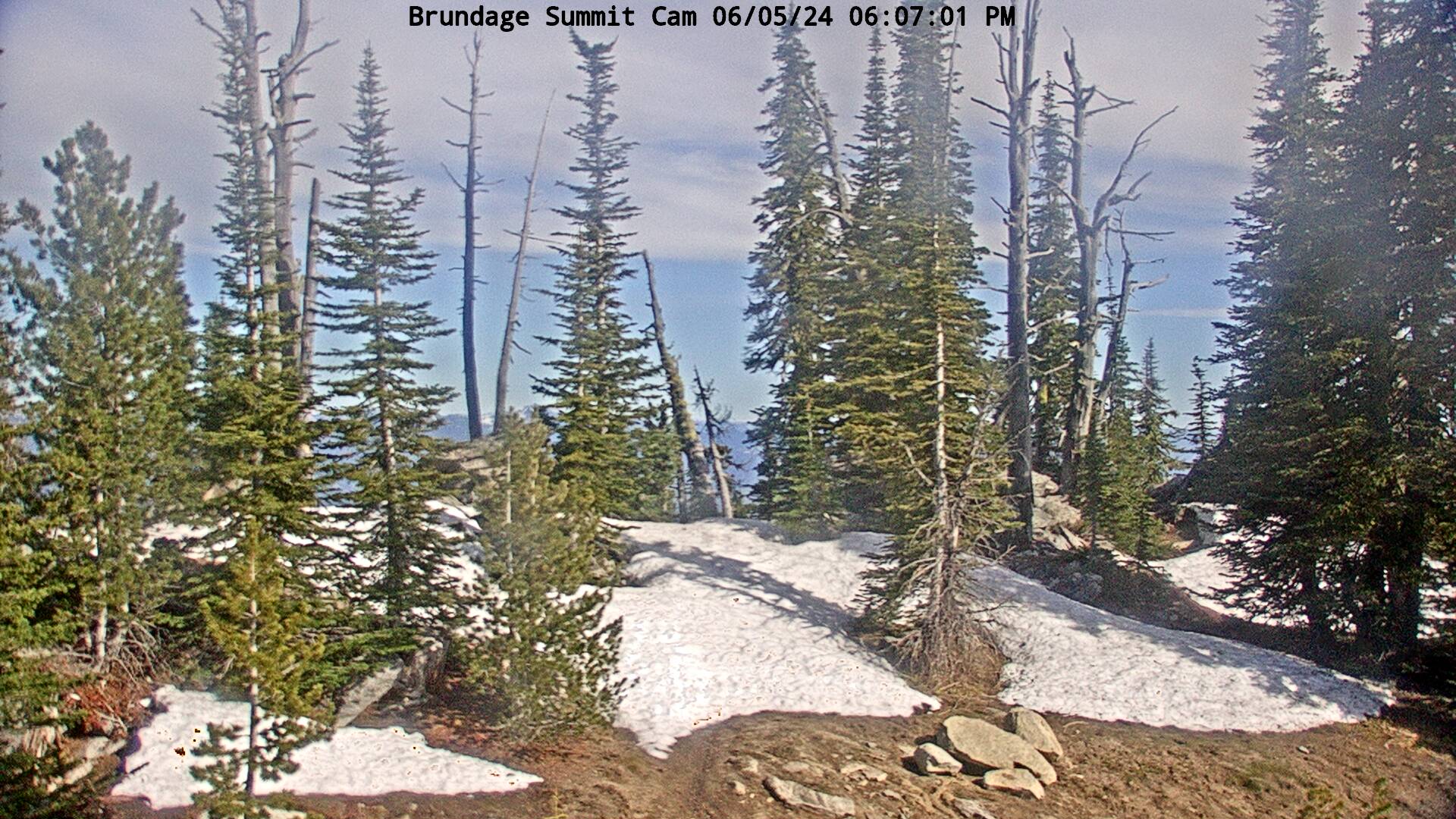
This view is from the top of the Blue Bird Quad, elevation 7640′. View rotates automatically. Click image for larger view.
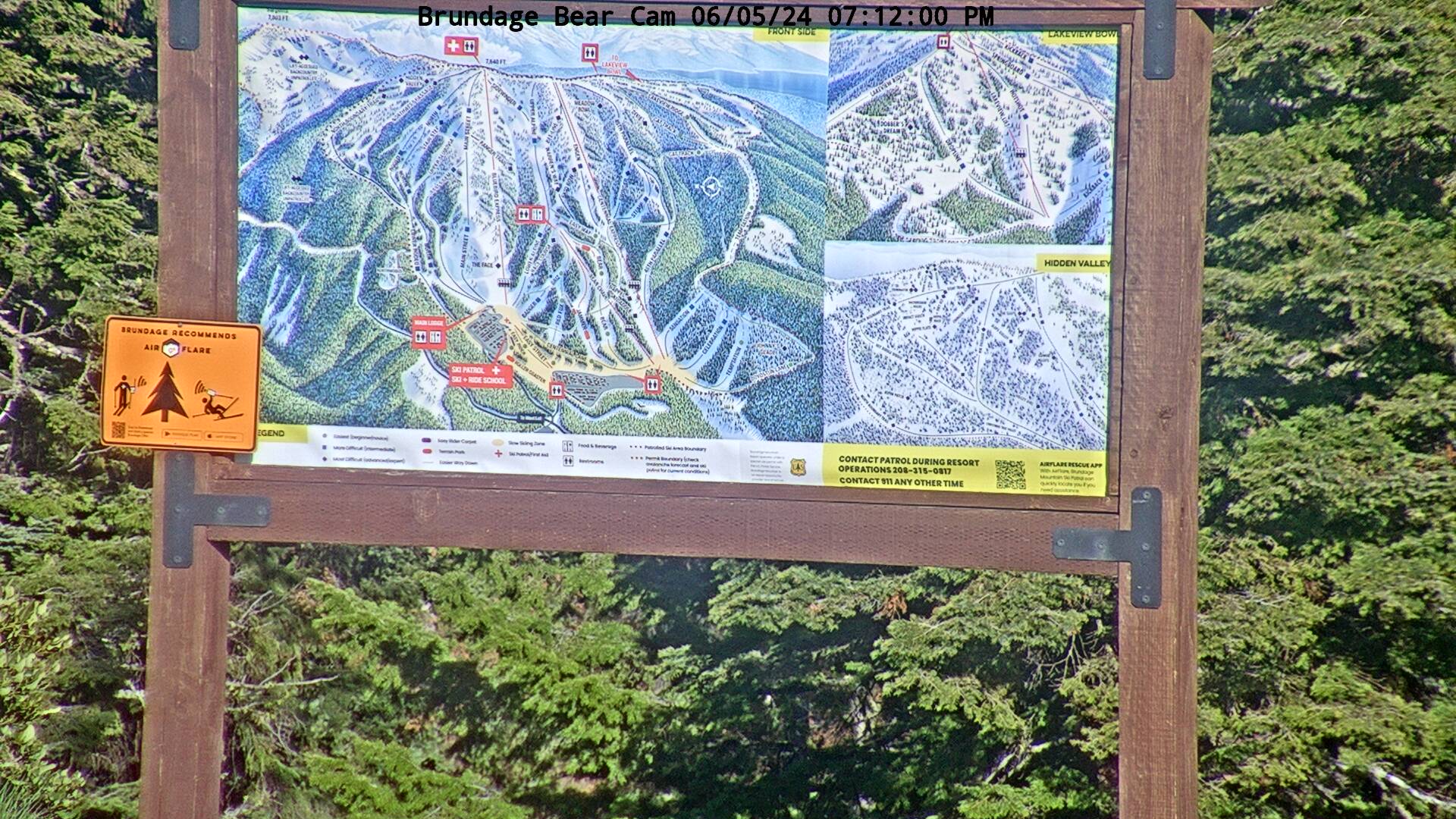
This view is from the top of the Bear Chair, elevation 6490’. View rotates automatically. Click image for larger view.
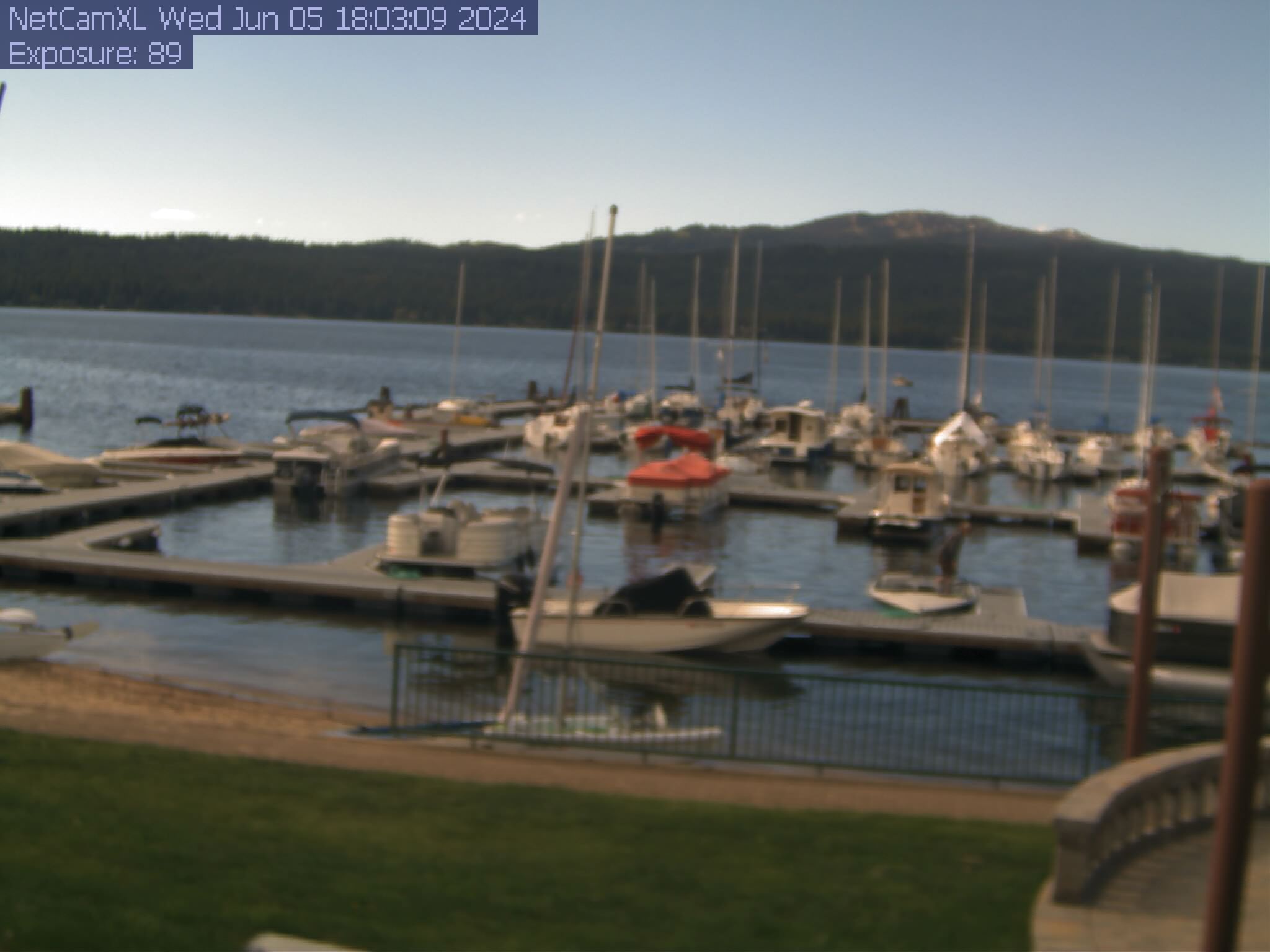
View across Payette Lake towards back side of Brundage from May Marina.